Introduction
Online shopping has made buying clothes easier than ever, but it has also created a new problem: the “mystery box” experience. Many of the common mistakes when buying t shirts online happen before the order is even placed. You order a t-shirt that looks perfect on the website, only to discover it fits poorly, feels cheap, or looks completely different in person.
This is one reason apparel remains one of the highest-return categories in e-commerce. Industry reports continue to show that sizing issues, fabric expectations, and product quality mismatches are among the biggest reasons customers send clothing back.
The good news is that most of these problems are avoidable.
This guide covers the most common mistakes when buying t-shirts online and provides a simple checklist to help you choose better-fitting, higher-quality t-shirts every time.
Common Mistakes When Buying T Shirts Online: Ignoring the Size Chart
The “Medium” Myth
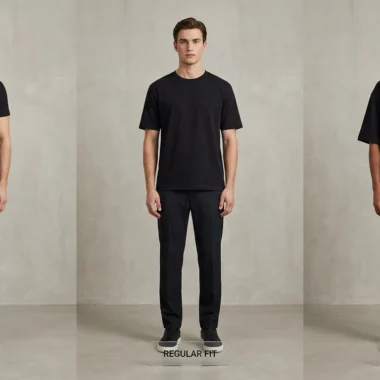
One of the biggest misconceptions in apparel shopping is assuming that a Medium is always a Medium.
In reality, sizing varies significantly between brands. A Medium from one company may fit like a Small from another and like a Large from a third.
Why This Happens
Different brands follow different sizing philosophies:
- Slim-fit brands size closer to the body.
- Streetwear brands often use oversized measurements.
- Fast-fashion brands sometimes use vanity sizing to make customers feel they wear a smaller size.
Never assume your usual size will fit perfectly across all brands.
Measuring Your Best-Fitting Shirt
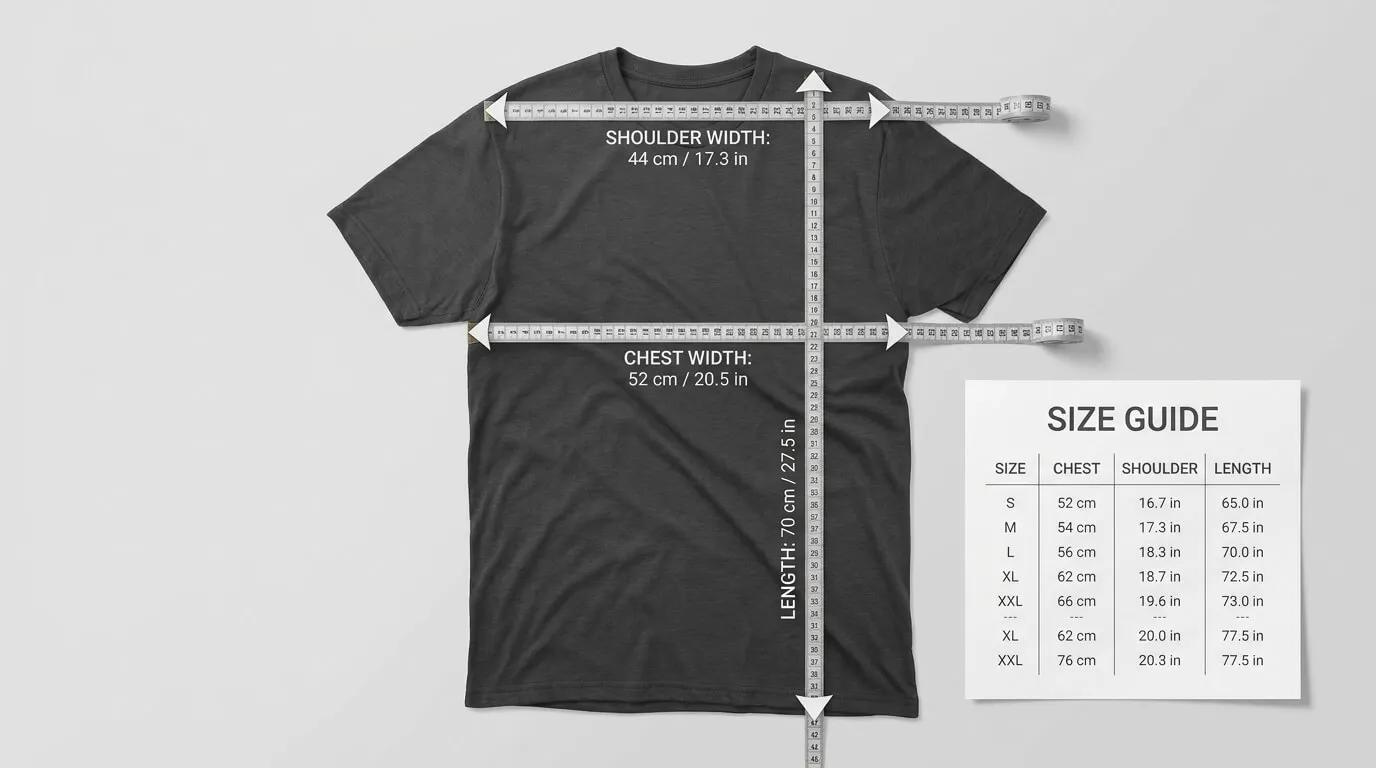
Instead of relying on your body measurements alone, measure a t-shirt you already own and love.
Measure These Areas
Chest Width
- Lay the shirt flat.
- Measure from armpit to armpit.
Length
- Measure from the highest shoulder point to the hem.
Shoulder Width
- Measure from shoulder seam to shoulder seam.
Compare these numbers directly with the product size chart.
This approach is far more accurate than guessing.
Reading Customer Fit Reviews
Reviews often reveal details that size charts cannot.
Look for phrases such as:
- Runs small
- Runs large
- Oversized fit
- Boxy fit
- Slim fit
- Shrinks after washing
Photo reviews are especially valuable because they show how the garment fits real people rather than professional models.
Common Mistakes When Buying T Shirts Online: Overlooking Fabric Composition
The Trap of “100% Cotton”
Many shoppers assume all cotton is identical.
It isn’t.
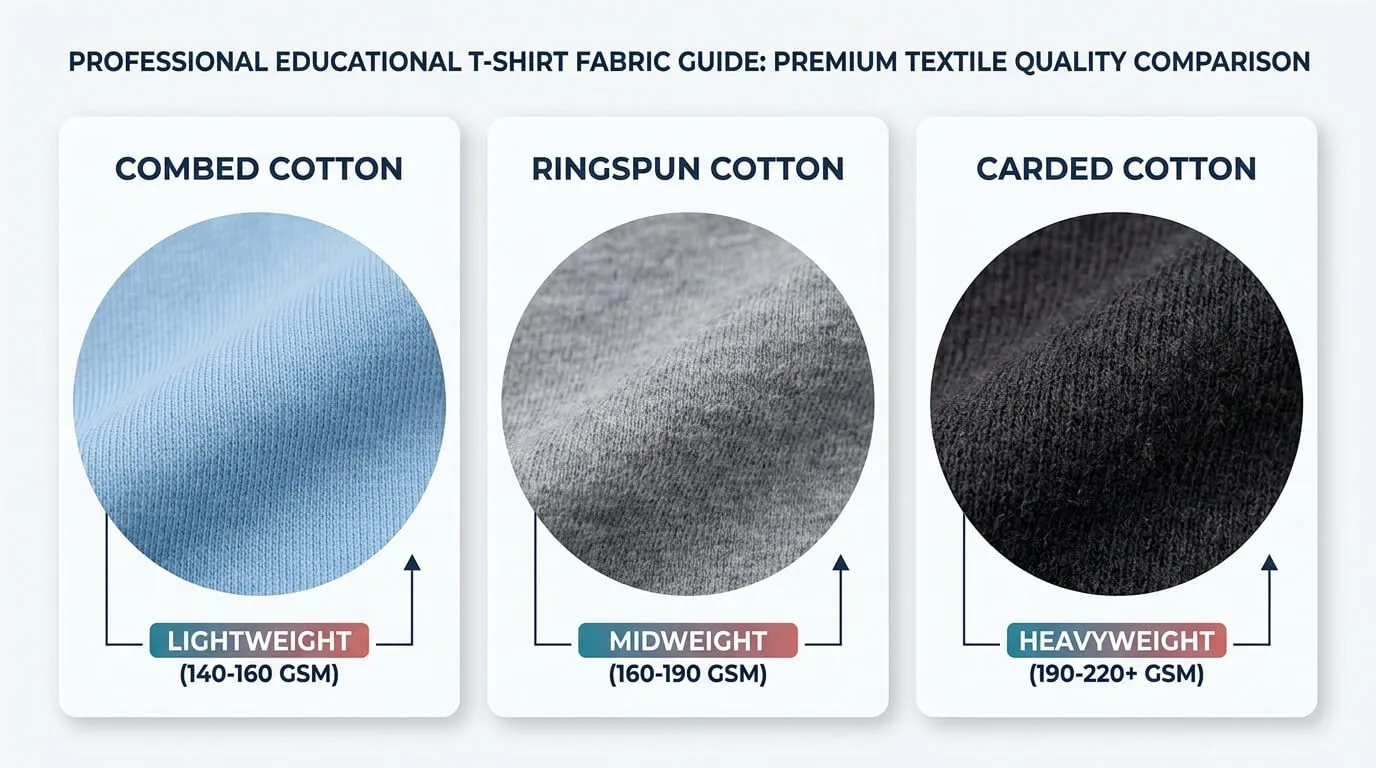
Types of Cotton
Carded Cotton
- Affordable
- Rougher texture
- More likely to pill
Combed Cotton
- Softer
- Cleaner fibers
- Better durability
Ringspun Cotton
- Premium feel
- Stronger yarn structure
- Improved softness
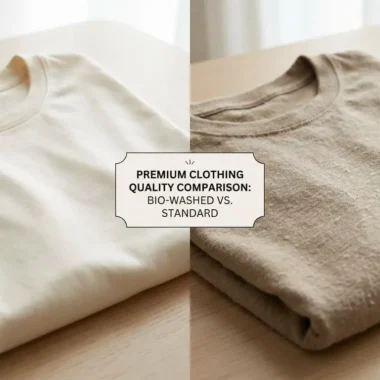
Two shirts labeled “100% cotton” can feel completely different depending on the cotton quality.
Understanding Blends
Poly-Cotton Blends
Advantages:
- More durable
- Less shrinkage
- Wrinkle resistant
Disadvantages:
- Less breathable than pure cotton
Tri-Blends
Usually combine:
- Cotton
- Polyester
- Rayon
Benefits:
- Extremely soft feel
- Lightweight comfort
- Better drape
Trade-off:
- Often more expensive
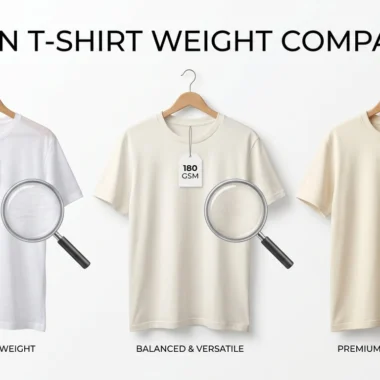
Weight and GSM (Grams Per Square Meter)
Fabric weight dramatically affects comfort.
Lightweight (120–150 GSM)
Best for:
- Summer weather
- Activewear
- Hot climates
Midweight (160–200 GSM)
Best for:
- Everyday wear
- Retail t-shirts
- Balanced comfort
Heavyweight (220+ GSM)
Best for:
- Streetwear
- Oversized fits
- Structured looks
For warm June weather, lightweight or midweight fabrics typically provide the best comfort.
Common Mistakes When Buying T Shirts Online: Falling for Product Photos
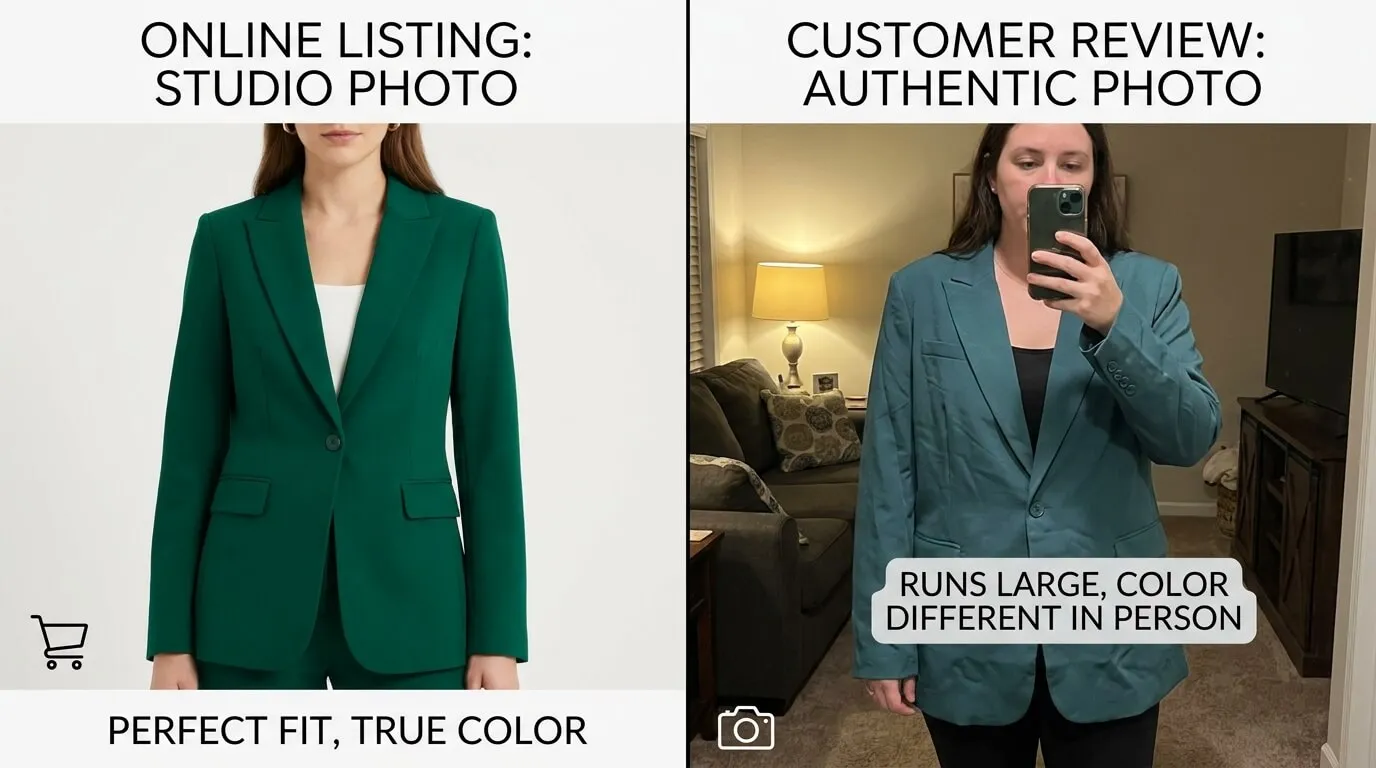
The Power of Studio Lighting and Pinning
Product photography is designed to make garments look their best.
Many brands:
- Pin shirts behind the model
- Adjust lighting heavily
- Edit colors in post-production
This can create unrealistic expectations.
Warning Signs
Watch for:
- No customer photos
- Perfectly wrinkle-free garments
- Overly edited textures
Authentic customer images are usually more trustworthy.
Checking for True Color Accuracy
Colors often appear different across devices.
Why This Happens
Factors include:
- OLED displays
- Brightness settings
- Color calibration
Always check customer-uploaded photos to see real-world color representation.
The Model Height Trap
You’ll often see descriptions such as:
Model is 6’2″ wearing a Large.
This information matters.
If you’re 5’7″, the shirt may fit very differently on your body.
Compare:
- Model height
- Model weight
- Garment size worn
With your own measurements before ordering.
Common Mistakes When Buying T Shirts Online: Skipping Return Policies
The Hidden Cost of “Free” Returns
Not all free returns are truly free.
Some retailers:
- Charge restocking fees
- Deduct return shipping costs
- Offer store credit instead of refunds
Always read the policy before purchasing.
Shipping Times and Return Windows
A common mistake is overlooking how return windows work.
Example:
- Shipping takes 10 days.
- Return window lasts 14 days.
You effectively have only four days to decide.
Always check:
- Delivery estimates
- Return deadlines
- Final sale exclusions
Quality Guarantee Policies
Quality guarantees reduce purchase risk.
Look for:
- Satisfaction guarantees
- Defect replacement policies
- Easy exchange programs
If your order arrives damaged, take photos immediately to support any claim.
Common Mistakes When Buying T Shirts Online: Ignoring Sustainability
The Cost of Ultra-Fast Fashion
Cheap t-shirts often seem like bargains.
However, low-cost garments frequently:
- Fade quickly
- Stretch out
- Develop holes
- Require frequent replacement
What appears cheap initially can become expensive over time.
Certifications That Actually Matter
Look for certifications such as:
- GOTS (Global Organic Textile Standard)
- Fair Trade
- OEKO-TEX Standard 100
These indicate higher production standards and greater transparency.
Investing in Basics
The smartest apparel purchases focus on value rather than price.
Cost Per Wear Example
Premium Tee
- Cost: $30
- Lifespan: 150 wears
- Cost per wear: $0.20
Cheap Tee
- Cost: $10
- Lifespan: 10 wears
- Cost per wear: $1.00
The premium shirt is actually cheaper over time.
Your 3-Step Pre-Purchase Checklist
Before clicking “Buy Now”:
1. Verify Measurements
Compare your favorite t-shirt measurements with the brand’s size chart.
2. Check Fabric Details
Look beyond “100% cotton” and understand GSM, cotton type, and blends.
3. Review Policies and Customer Photos
Study real customer images and confirm return eligibility.
Conclusion
Most online t-shirt shopping mistakes fall into three categories:
- Choosing the wrong size
- Ignoring fabric composition
- Trusting product photos without verification
Fortunately, all three problems are easy to avoid with a little extra research.
The next time you shop online, take a few minutes to check measurements, understand the fabric, and review customer feedback. You’ll save money, avoid returns, and build a wardrobe filled with t-shirts that actually fit and last.
Remember: buy for quality and fit—not just the lowest price tag.
Related Article:- What Is GSM in T-Shirts? The Ultimate Buyer’s Guide to Fabric Weight