Introduction
Imagine launching a t-shirt brand without buying inventory, renting warehouse space, or handling shipping. That is exactly why Print-On-Demand (POD) has become one of the most popular business models in e-commerce.
In 2026, entrepreneurs, designers, creators, and influencers are using POD platforms to build apparel brands with minimal upfront investment. All you need is a laptop, a creative idea, and the right technology stack.
If you’re wondering how a print on demand t shirt business works, this guide walks you through every step—from creating your first design to delivering products to customers around the world.
Whether you’re starting a side hustle or building the next apparel brand, this article provides a complete roadmap to success.
How a Print On Demand T Shirt Business Works: Understanding the Basics
What is Print-On-Demand (POD)?
Print-On-Demand is an e-commerce fulfillment model where products are printed only after a customer places an order.
Unlike traditional apparel businesses, there is no need to purchase inventory in advance.
The Basic Model
A POD business operates similarly to dropshipping:
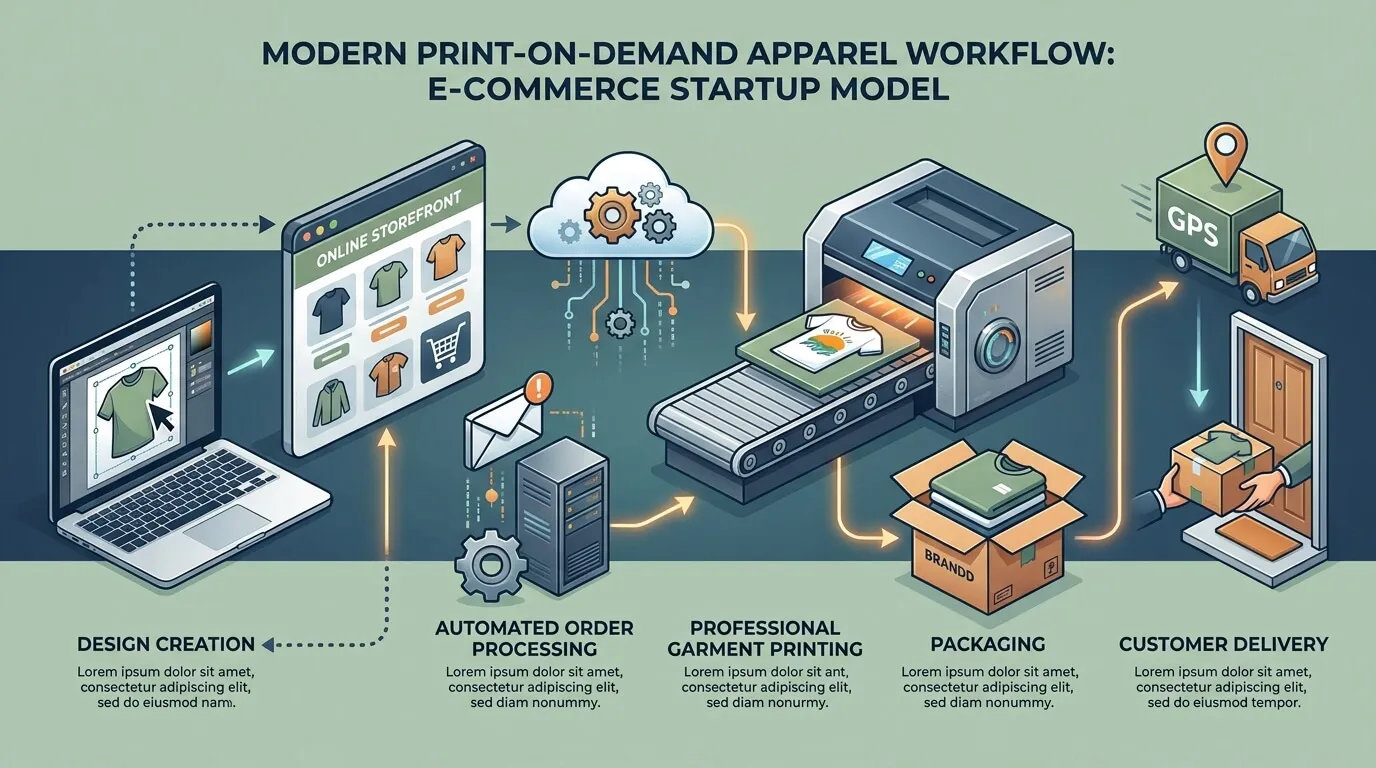
- Create a design.
- Upload it to a POD supplier.
- List products in your store.
- Receive customer orders.
- Supplier prints and ships the item.
The biggest advantage is the pay-as-you-go structure.
You only pay production costs after receiving a customer order.
POD vs Traditional Bulk Printing
| Print-On-Demand | Bulk Screen Printing |
|---|---|
| No inventory | Requires inventory |
| Low startup cost | High upfront investment |
| Minimal risk | Higher financial risk |
| Easy product testing | Harder to test designs |
| Lower margins | Higher margins at scale |
Who Is Involved?
The Designer (Brand Owner)
This is you.
Responsibilities include:
- Creating designs
- Managing the store
- Running marketing campaigns
- Building the brand
The Platform (Storefront)
Your storefront is where customers shop.
Popular options include:
- Shopify
- Etsy
- WooCommerce
The Supplier
The supplier handles:
- Printing
- Quality control
- Packaging
- Shipping
The customer never sees the supplier.
They interact only with your brand.
Current Market Trends
The custom apparel industry continues to expand as consumers seek personalized products and niche-focused brands.
Major trends shaping POD in 2026 include:
- Sustainable apparel
- Organic cotton products
- Eco-friendly printing methods
- Smaller niche communities
- Creator-led brands
- Faster local fulfillment
Consumers increasingly prefer unique products over mass-produced clothing, creating opportunities for small apparel businesses.
How a Print On Demand T Shirt Business Works: Step-by-Step Order Workflow
Design and Upload
Everything starts with the design.
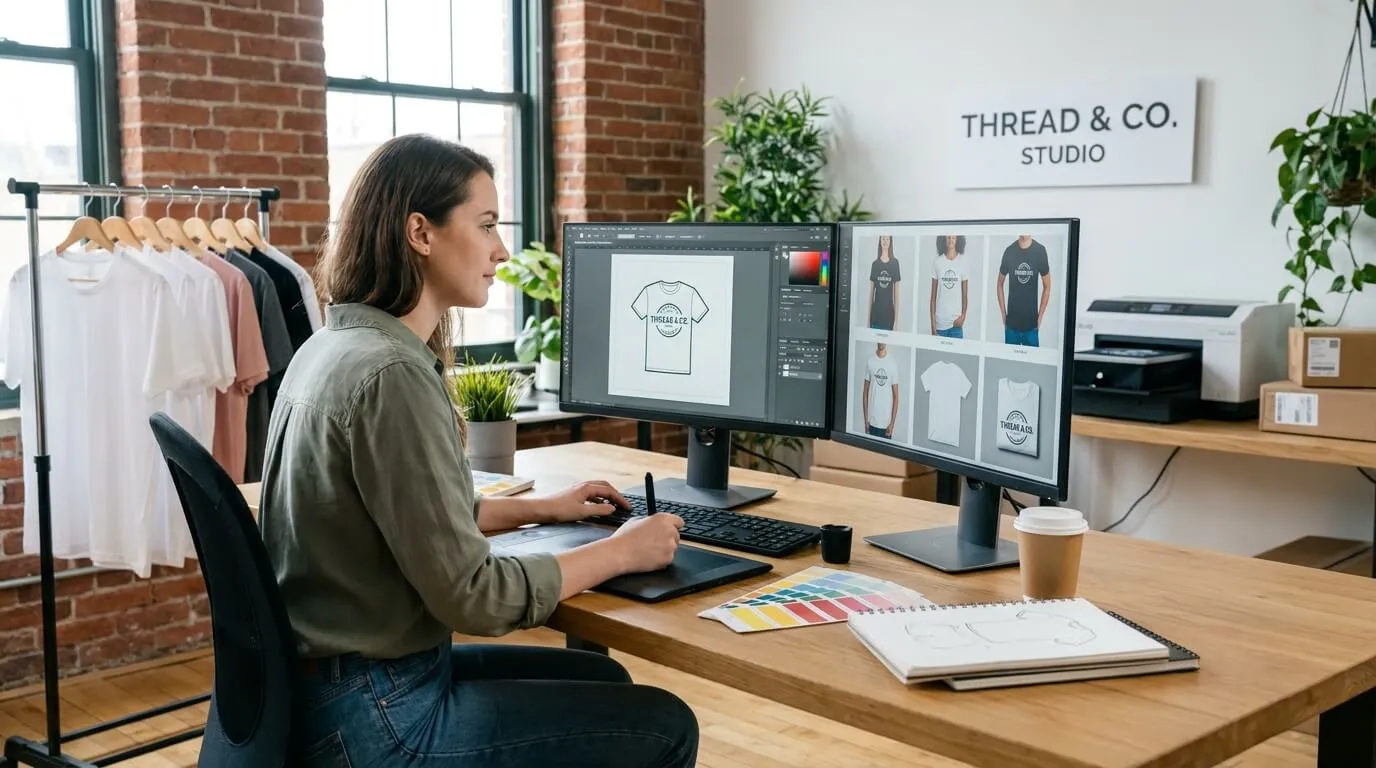
Creating Artwork
Popular design tools include:
- Canva
- Adobe Illustrator
- Adobe Photoshop
- Affinity Designer
File Requirements
For professional print quality:
- 300 DPI resolution
- Transparent PNG files
- RGB or supplier-recommended color profiles
Product Mockups
Mockups help customers visualize products before purchase.
Professional mockups often increase conversion rates because buyers can see how the shirt looks when worn.
The Sale and Automation
Once your store is connected to a POD supplier, the process becomes highly automated.
Customer Places an Order
Example:
Customer buys a t-shirt for $29.99.
Order Sync
The order automatically transfers to your POD supplier.
No manual processing required.
Payment Flow
Customer Pays Retail Price → Supplier Charges Production Cost → You Keep the Profit
Example:
- Customer pays: $29.99
- Product cost: $12.00
- Shipping cost: $4.00
- Gross profit: $13.99
Production and Logistics
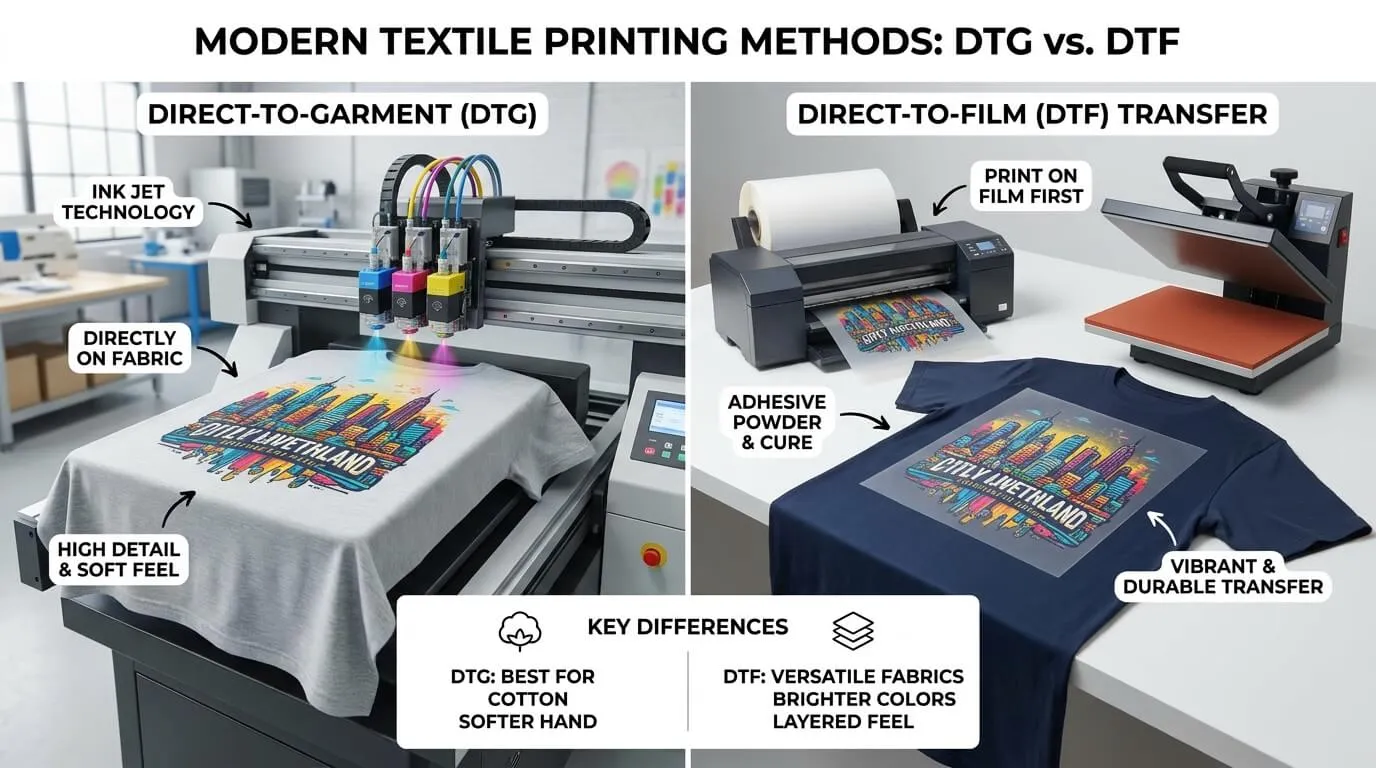
After receiving the order, production begins.
DTG (Direct-to-Garment)
Best for:
- Detailed artwork
- Small orders
- Full-color prints
Advantages:
- Unlimited colors
- Excellent detail
- No setup fees
DTF (Direct-to-Film)
Best for:
- Bold graphics
- Higher durability
- Complex materials
Advantages:
- Strong print adhesion
- Vibrant colors
- Better versatility
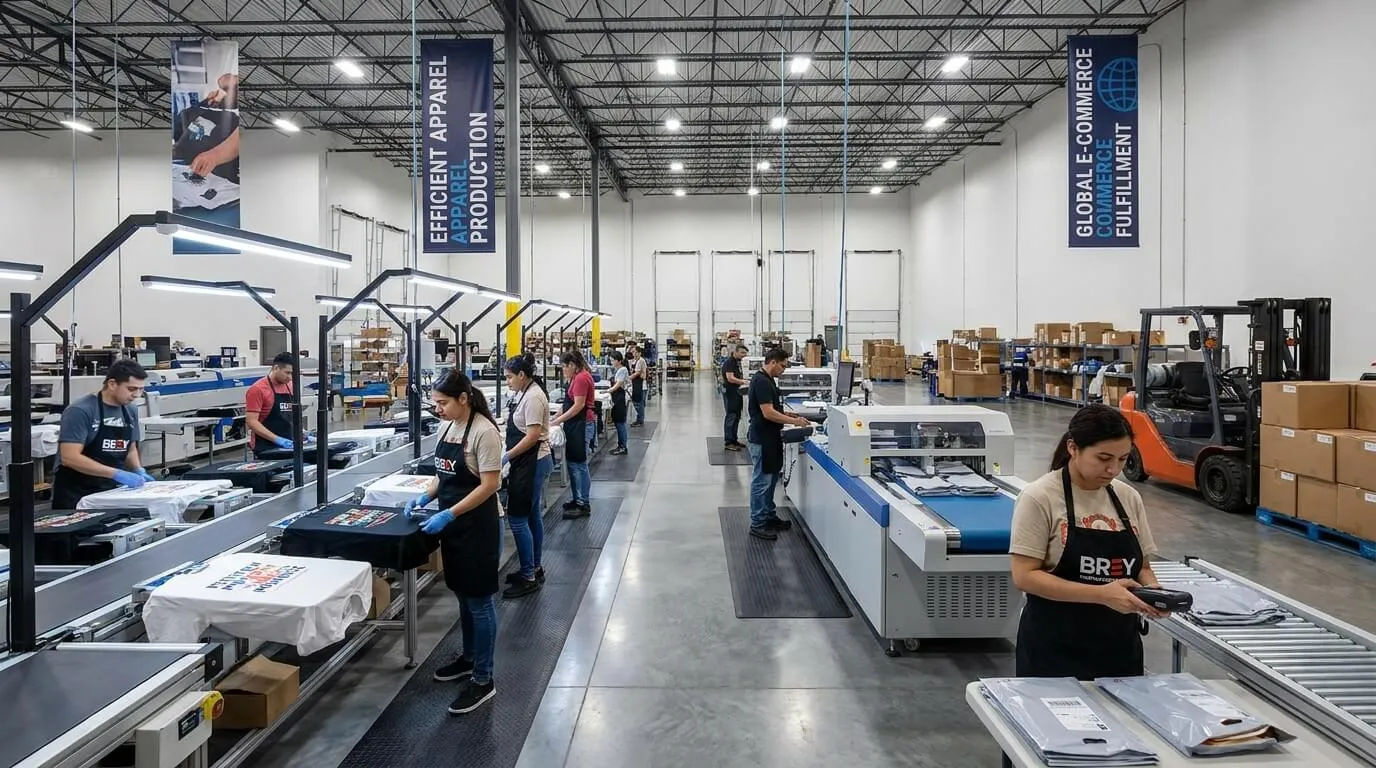
Quality Control and Shipping
The supplier:
- Prints the garment
- Inspects quality
- Packages the order
- Ships directly to the customer
This eliminates the need for warehousing and fulfillment management.
How a Print On Demand T Shirt Business Works: Choosing Your Tech Stack
E-commerce Platforms
Shopify
Best for:
- Scaling brands
- Advanced customization
- Paid advertising
Advantages:
- Easy integrations
- Professional storefronts
- Strong ecosystem
Etsy
Best for:
- New sellers
- Existing marketplace traffic
- Handmade and niche products
Advantages:
- Built-in audience
- Lower learning curve
WooCommerce
Best for:
- Full ownership
- WordPress users
- Advanced customization
Advantages:
- No marketplace restrictions
- Complete control
Top POD Suppliers
Printful
Strengths:
- Premium quality
- Strong branding options
- Reliable fulfillment
Drawback:
- Higher production costs
Printify
Strengths:
- Large supplier network
- Competitive pricing
- Product variety
Drawback:
- Quality can vary by print partner
Gelato
Strengths:
- Local production network
- Faster delivery
- Reduced shipping costs
Ideal for international brands.
Integration Basics
Connecting your store to a POD supplier typically takes less than an hour.
Key benefits include:
- Automatic order processing
- Product synchronization
- Inventory updates
- Shipping tracking
Automation allows you to focus on growth instead of operations.
Finding a Profitable Niche
Researching Trends
Successful POD businesses rarely target everyone.
Instead, they focus on specific communities.
Research Tools
Use:
- Google Trends
- TikTok Creative Center
- Pinterest Trends
- Instagram Explore
Micro-Niche Examples
Instead of “Gardening Shirts,” target:
- Left-handed gardeners
- Urban balcony gardeners
- Organic vegetable enthusiasts
Specific audiences often convert better than broad audiences.
Validation Strategies
Before launching dozens of products, validate demand.
Social Media Testing
Run:
- Instagram polls
- TikTok content tests
- Facebook community surveys
Small Ad Campaigns
Spend a modest budget testing multiple concepts.
Monitor:
- Click-through rates
- Engagement
- Purchase intent
Pricing for Profit
Many beginners price products incorrectly.
Calculate Cost of Goods Sold (COGS)
Include:
- Product cost
- Printing cost
- Shipping fees
- Platform fees
- Advertising expenses
Price Based on Value
Customers often buy:
- Design quality
- Brand identity
- Emotional connection
Not simply the cheapest shirt available.
Premium branding supports higher profit margins.
Marketing Your Brand for Sales
The Power of Organic Social Media
Organic content remains one of the most effective growth channels.
Create Process Content
Examples:
- Design creation videos
- Behind-the-scenes content
- Product packaging clips
These formats perform well on:
- Instagram Reels
- TikTok
- YouTube Shorts
User-Generated Content (UGC)
Encourage customers to:
- Share photos
- Tag your brand
- Leave reviews
UGC builds trust and social proof.
Paid Acquisition
Meta Ads
Ideal for:
- Interest targeting
- Lookalike audiences
- Retargeting campaigns
Pinterest Ads
Effective for:
- Lifestyle products
- Fashion inspiration
- Long purchase cycles
Retargeting
Many visitors don’t purchase immediately.
Retargeting helps bring them back and recover abandoned carts.
Building Loyalty
Acquiring customers is expensive.
Keeping them is profitable.
Build an Email List
Send:
- Product launches
- Exclusive offers
- Restock alerts
Increase Average Order Value
Offer:
- Product bundles
- Multi-buy discounts
- Limited-edition drops
Loyalty Programs
Reward repeat customers with:
- Points systems
- Early access
- VIP perks
Conclusion
Understanding how a print on demand t shirt business works is simpler than many people expect.
The process follows a straightforward cycle:
- Create designs.
- Upload products.
- Connect a POD supplier.
- Generate sales.
- Supplier fulfills orders.
- Earn profit.
The beauty of POD lies in its low-risk structure. There is no inventory to manage, no warehouse to rent, and no need to invest thousands of dollars upfront.
Final Expert Tip
The biggest mistake new POD sellers make is focusing on quantity instead of quality.
A single great design targeted at the right niche often outperforms dozens of generic products.
Ready to Start?
Choose a niche, create your first design, connect a supplier, and launch your first product today. The sooner you start testing, the faster you’ll discover what customers actually want.
Related Article:- What Is GSM in T-Shirts? The Ultimate Buyer’s Guide to Fabric Weight