Introduction
Have you ever wondered why some t-shirts feel incredibly light and airy while others feel thick, structured, and premium? The answer often comes down to one important measurement: GSM.
If you’ve ever purchased a t-shirt online, sourced apparel for a clothing brand, or ordered promotional merchandise, you’ve likely come across terms like 180 GSM cotton or 240 GSM heavyweight tee. Understanding what these numbers mean can help you make smarter buying decisions, avoid low-quality garments, and choose the perfect fabric for your needs.
What Does GSM In T-Shirts Mean?
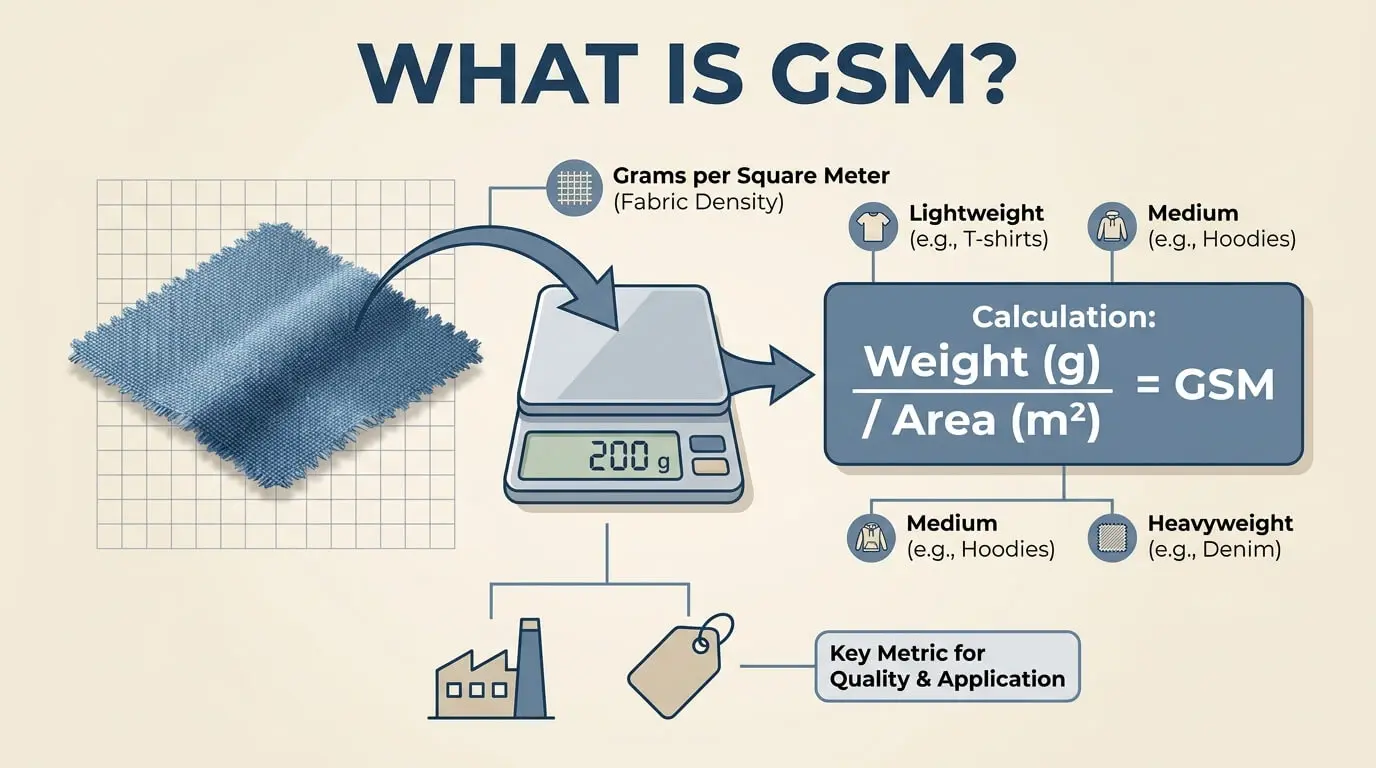
GSM stands for Grams per Square Meter. It is a standard textile measurement used worldwide to indicate the weight and density of a fabric.
In simple terms, GSM tells you how much one square meter of fabric weighs in grams. A higher GSM generally means a heavier, denser fabric, while a lower GSM indicates a lighter and more breathable material.
Why GSM Matters
Choosing the right GSM impacts:
- Comfort and breathability
- Durability and longevity
- Printing quality
- Perceived product value
- Brand positioning
- Production costs
Whether you’re buying a single t-shirt or sourcing thousands for your clothing brand, understanding GSM can save money while improving customer satisfaction.
In this guide, we’ll break down GSM categories, explain how they affect garment performance, and help you choose the ideal fabric weight for every use case.
Understanding the Basics of GSM
How GSM is Measured
The GSM measurement is straightforward:
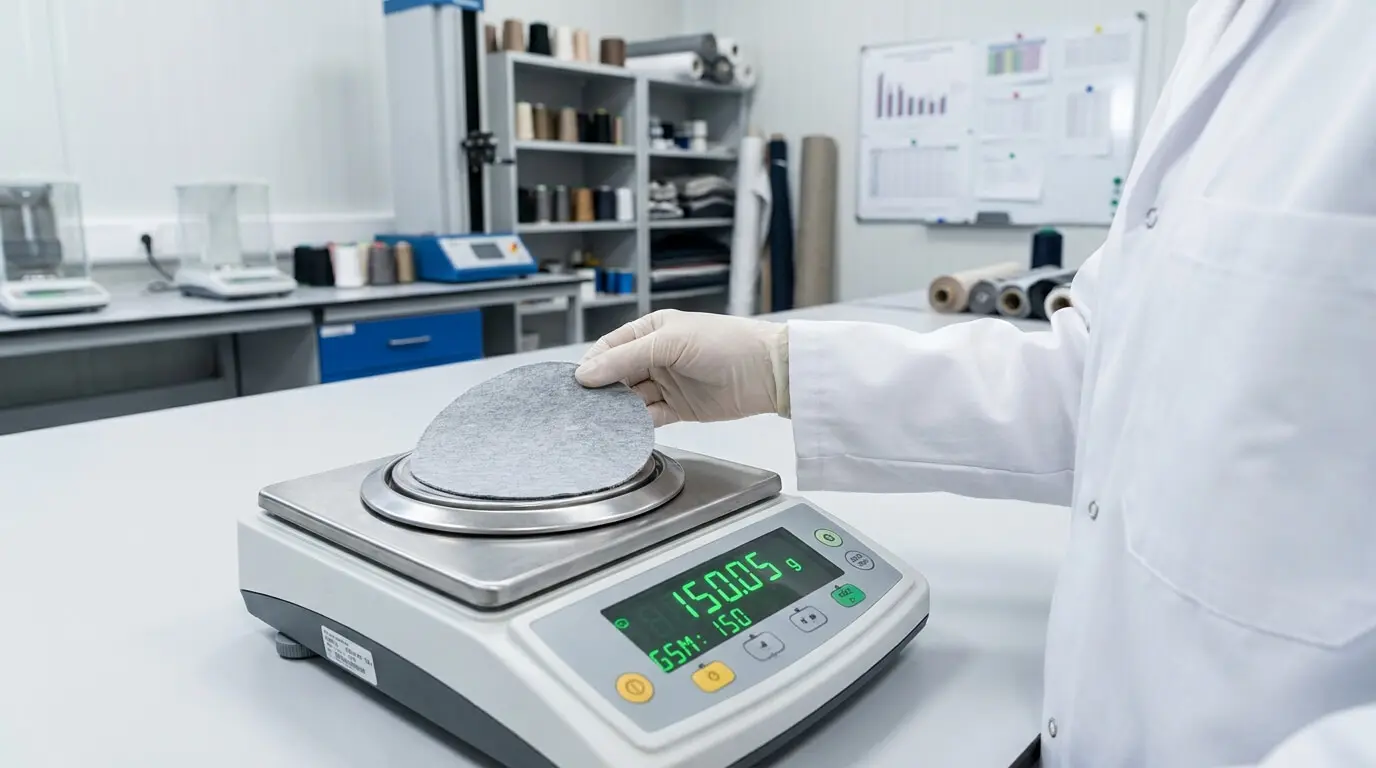
A textile sample measuring exactly one square meter is weighed on a precision scale. The resulting weight in grams becomes the fabric’s GSM value.
For example:
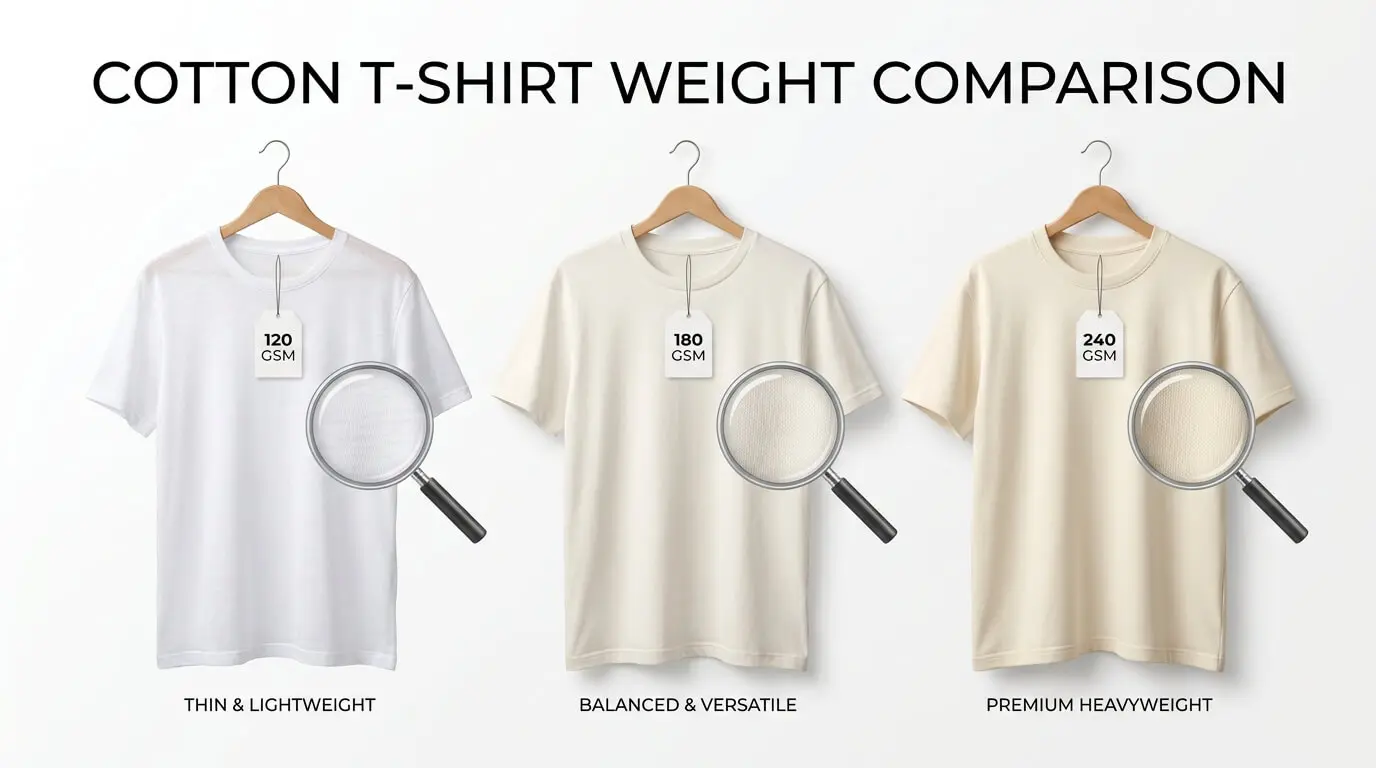
- Fabric weighing 120 grams = 120 GSM
- Fabric weighing 180 grams = 180 GSM
- Fabric weighing 240 grams = 240 GSM
Today, GSM remains the global standard for textile sourcing, manufacturing, and quality control because it provides a consistent method of comparing fabrics across suppliers and countries.
Common Misconception: Weight vs Thickness
Many people assume higher GSM automatically means thicker fabric.
This isn’t always true.
Factors such as:
- Yarn count
- Knitting technique
- Fiber type
- Fabric construction
can influence thickness independently of GSM.
A tightly knit 180 GSM fabric may feel thicker than a loosely knit 200 GSM fabric despite having a lower weight.
The Link Between Weight and Feel
One of the biggest factors influencing customer perception is the fabric’s “hand-feel.”
Hand-feel refers to how a garment feels when touched or worn.
As GSM increases:
- Fabric feels denser
- Structure improves
- Opacity increases
- Durability rises
As GSM decreases:
- Breathability improves
- Fabric becomes softer
- Drying time decreases
- Comfort in hot climates increases
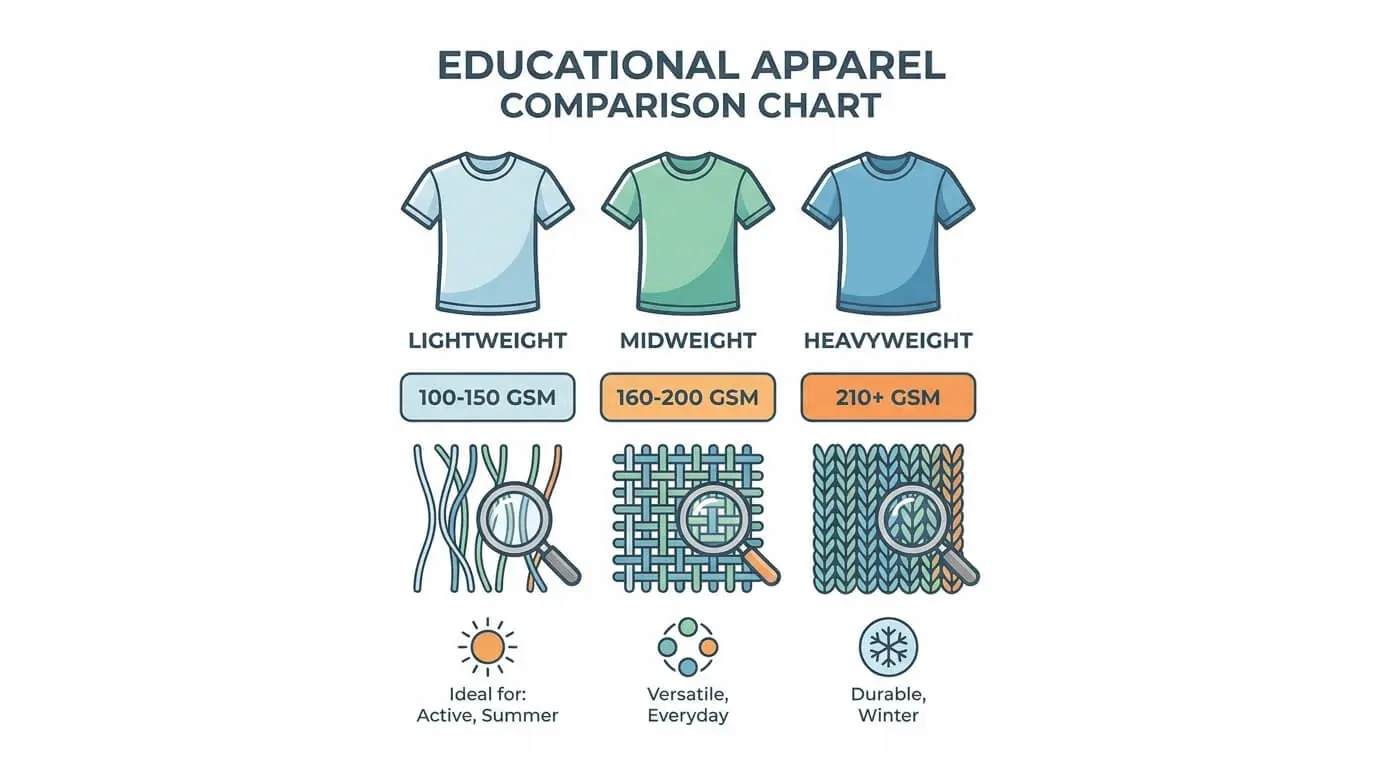
GSM Range Chart
| GSM Range | Category | Feel |
|---|---|---|
| 100-150 GSM | Lightweight | Soft, airy |
| 160-200 GSM | Mid-weight | Balanced, versatile |
| 210-240 GSM | Heavyweight | Premium, structured |
| 250+ GSM | Ultra Heavyweight | Luxury streetwear |
Breaking Down the GSM Categories
Lightweight Fabrics (100–150 GSM)

Lightweight fabrics are designed primarily for comfort and breathability.
Best Uses
- Gym wear
- Running shirts
- Undershirts
- Summer apparel
- Performance clothing
Advantages
- Excellent airflow
- Quick drying
- Comfortable in hot weather
- Lightweight feel
Drawbacks
- Lower durability
- More prone to tearing
- Increased transparency
- Reduced shape retention
Many low-cost promotional shirts fall within this category, which is why they often feel thin or see-through.
Mid-weight Fabrics (160–200 GSM)

Often called the “Goldilocks Zone,” mid-weight fabrics offer an ideal balance between comfort and durability.
Best Uses
- Retail t-shirts
- Brand merchandise
- Corporate uniforms
- Casual everyday wear
Advantages
- Versatile for most climates
- Better opacity
- Good print performance
- Comfortable drape
Drawbacks
- Less structured than heavyweight fabrics
- May not provide the premium feel desired by luxury brands
The majority of successful apparel brands use 180 GSM cotton because it offers excellent value and broad consumer appeal.
Heavyweight Fabrics (210+ GSM)

Heavyweight fabrics have become increasingly popular thanks to modern streetwear and oversized fashion trends.
Best Uses
- Premium fashion brands
- Streetwear
- Oversized tees
- Workwear
- Luxury merchandise
Advantages
- Premium feel
- Superior durability
- Better shape retention
- Less transparency
- Enhanced garment structure
Drawbacks
- Reduced breathability
- Longer drying times
- Higher production costs
- Can feel warm indoors
Many premium brands now use 240 GSM cotton or higher to create a luxury experience and justify premium pricing.
How to Choose GSM Based on Use Case
Performance and Activewear
When it comes to sportswear, lower GSM is often the better choice.
Athletes need:
- Breathability
- Moisture management
- Lightweight comfort
Example Comparison
130 GSM Polyester Blend
- Superior airflow
- Quick moisture evaporation
- Ideal for intense workouts
180 GSM Cotton Tee
- Better structure
- Greater comfort for casual wear
- Slower moisture release
For sports and fitness apparel, prioritize airflow and moisture control over fabric thickness.
Streetwear and Fashion Branding
The rise of oversized silhouettes has dramatically increased demand for heavyweight fabrics.
Modern consumers associate heavier garments with:
- Luxury
- Quality
- Durability
- Premium craftsmanship
Why Luxury Brands Use Heavy GSM
Higher GSM fabrics create:
- Better drape
- Enhanced structure
- Stronger visual presence
- Greater perceived value
A 240 GSM heavyweight tee often feels noticeably more premium than a standard 180 GSM shirt, even before branding or packaging is considered.
Corporate and Event Merchandise
Corporate gifts represent your brand.
Using extremely thin shirts can create a negative impression.
Risks of 120 GSM Promotional Shirts
- Feels cheap
- Lower durability
- Reduced repeat usage
Why 180 GSM Is the Industry Sweet Spot
Most successful corporate merchandise programs choose 180 GSM because it delivers:
- Better perceived value
- Stronger print quality
- Higher wear frequency
- Improved brand visibility
When recipients enjoy wearing the shirt, your brand receives ongoing exposure long after the event ends.
The Impact of GSM on Printing and Dyeing
Screen Printing and Heat Press
Fabric weight significantly affects print performance.
Lightweight Fabrics
Challenges include:
- Ink bleed-through
- Fabric distortion
- Reduced print opacity
Heavyweight Fabrics
Benefits include:
- Better print support
- Enhanced color vibrancy
- Improved durability
However, excessive ink deposits on heavyweight garments can create stiff prints.
Best Practice
Match ink density with fabric weight to maintain softness and print quality.
Fabric Shrinkage and Longevity
Heavier fabrics generally withstand repeated washing better than lighter alternatives.
Benefits of Higher GSM
- Better shape retention
- Reduced stretching
- Improved lifespan
GSM and Pilling
Pilling occurs when loose fibers form small balls on the fabric surface.
Factors affecting pilling include:
- Fiber quality
- Yarn construction
- Fabric weight
Higher GSM fabrics often resist pilling more effectively because of their denser construction.
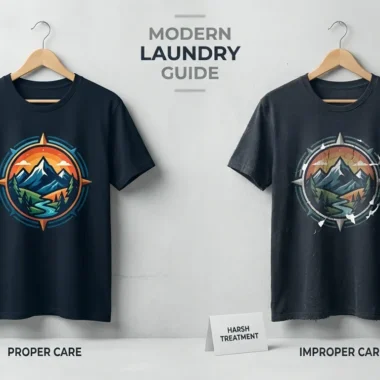
Care Tips
To preserve fabric quality:
- Wash inside out
- Use cold water
- Avoid excessive heat drying
- Follow garment care instructions
Buyer’s Checklist: What to Ask Suppliers
Verifying Fabric Claims
Never rely solely on product descriptions.
Request Fabric Swatches
A swatch book allows you to:
- Feel the fabric
- Compare weights
- Evaluate softness
- Assess print suitability
Red Flags
Be cautious when suppliers:
- Cannot provide GSM specifications
- Refuse swatch requests
- Offer vague fabric descriptions
Transparency usually indicates professionalism.
Ask About Composition
Fabric weight is only part of the story.
Always verify:
- 100% cotton
- Cotton-poly blends
- Combed cotton
- Ring-spun cotton
- Organic cotton options
Balancing Cost and Quality
Higher GSM fabrics require:
- More raw material
- Greater shipping costs
- Increased manufacturing expenses
As GSM rises, production costs generally increase.
Finding the Value Point
For most apparel brands:
- Budget merch: 160 GSM
- Retail quality: 180 GSM
- Premium fashion: 220–240 GSM
- Luxury streetwear: 240+ GSM
Top 3 Questions for Manufacturers
- What is the exact GSM of the fabric?
- Can you provide fabric swatches or sample garments?
- What shrinkage percentage should I expect after washing?
These questions quickly reveal whether a supplier understands quality standards.
Conclusion
GSM is one of the most important factors when evaluating a t-shirt’s quality, comfort, durability, and value.
To recap:
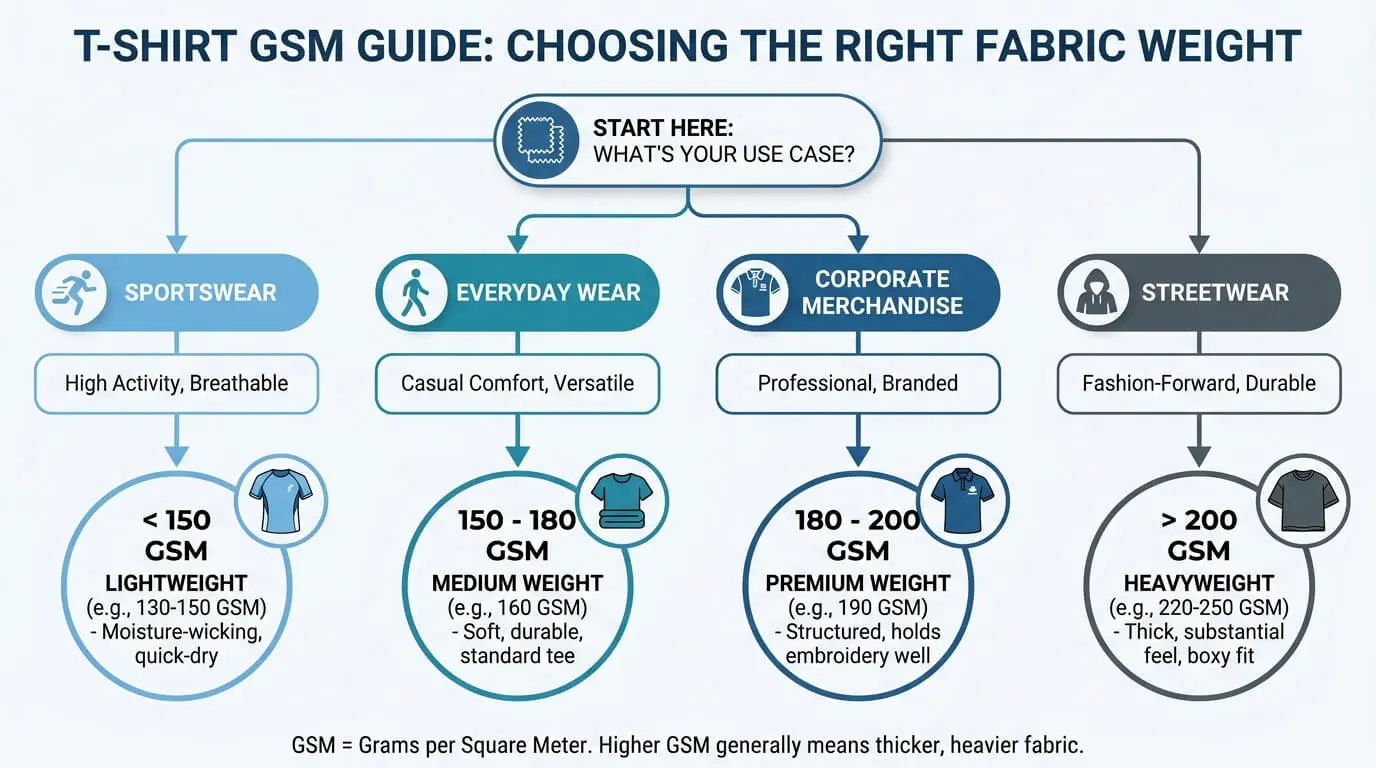
- 100–150 GSM: Lightweight and breathable
- 160–200 GSM: Balanced and versatile
- 210+ GSM: Premium and durable
There is no universally “best” GSM.
The right choice depends entirely on the intended use, climate, target audience, and brand positioning.
If you’re planning a bulk order, launching a clothing line, or sourcing corporate merchandise, always request sample packs before making a large purchase. Testing fabrics firsthand is the fastest way to ensure you choose the perfect weight for your customers and your brand.